
LED Light Therapy
Gentle, cumulative, and honest about its size.
A comfortable, non-invasive treatment using specific light wavelengths — best understood as a supporting treatment rather than a standalone answer.
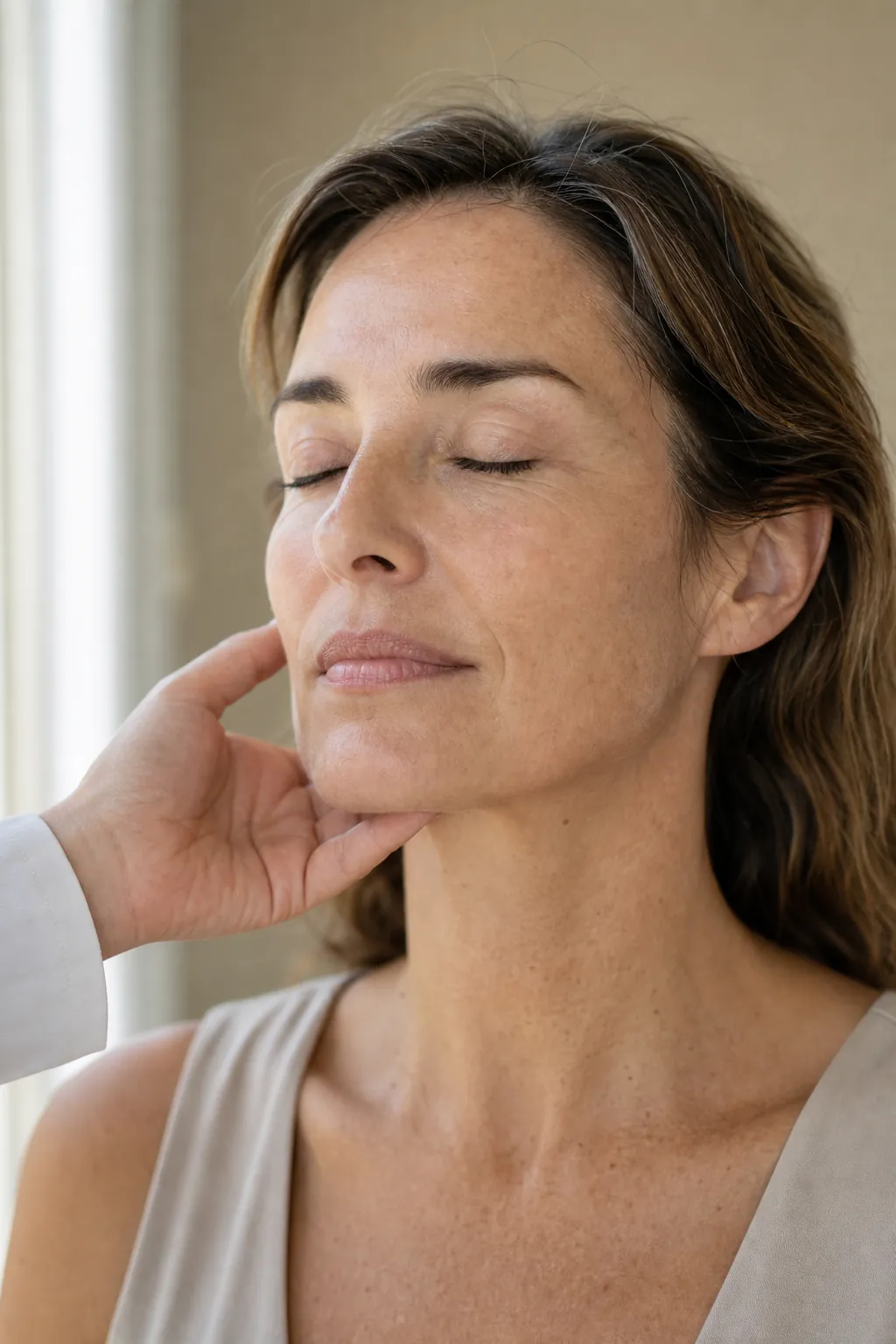
LED therapy uses specific wavelengths of light on the skin. Red light is commonly used to support skin renewal and a calmer appearance; blue light is used for blemish-prone skin.
There is no heat damage, no injury and no recovery. You lie comfortably for 20 to 30 minutes and can return to your day immediately, makeup included.
Where it fits — an honest placement
LED is gentle, and gentleness cuts both ways. Its effects are cumulative and modest rather than dramatic, and it is most useful as part of a plan rather than as the whole plan.
It pairs well with other treatments, supports recovery after them, and suits people who want something with genuinely no downtime. If you are expecting the scale of change a resurfacing or collagen-induction treatment produces, this is not that treatment, and we would say so rather than sell you a longer course of it.
What the evidence looks like
Research into LED for skin is active and generally supportive for specific uses, particularly blemish-prone skin and supporting recovery, though it is less well established than for older, more studied modalities.
We would rather describe that accurately than overstate it. It is a low-risk, comfortable treatment with a real but modest effect — which is a reasonable thing to offer, and a poor thing to exaggerate.
Frequently Asked Questions
None. There is no redness, no irritation and no recovery, and you can apply makeup and return to your day straight away.
It is recommended as a course, because the effect is cumulative rather than immediate. Your practitioner will suggest a number and interval.
No. You simply relax while the light does its work; there is no heat damage or injury involved.
Red light is commonly used to support skin renewal and a calmer appearance; blue light is used for blemish-prone skin. Which is appropriate is decided at assessment.
It is best understood as a supporting treatment rather than a standalone answer. Its effect is real but modest, and it works well alongside other approaches.
It suits most skin types and is low risk, but suitability — including any light-sensitising medication you take — is checked at assessment.
Start with a consultation.
We will discuss what you would like to achieve, explain how the treatment works and help you understand what you can realistically expect.
Related treatments
- LipoZero 5DA non-invasive body-contouring treatment for localised fat. Consultation-led, measured, and grounded in realistic expectations.
- Microneedling with DermapenProfessional microneedling for acne scars, skin texture and skin quality — assessed and delivered by a practitioner.
- Skin RejuvenationAn assessment-led approach to dullness, uneven tone and texture — working with your skin's own renewal rather than resurfacing it aggressively.
Further reading
- LipoZero 5D: What Body Contouring Can Realistically AchieveNon-invasive body contouring explained: how it works, what the published research shows, who it may suit, and why expectations matter.
- Microneedling for Acne Scars: What It Can and Cannot DoMicroneedling improves some acne scars well and others barely. Which scar types respond, how many sessions it takes, and darker skin advice.