
Acne Scar Treatment
Improvement is achievable. Erasure is not.
Treatment matched to your scar type, with a clear statement of which of your scars are likely to change and which are not.
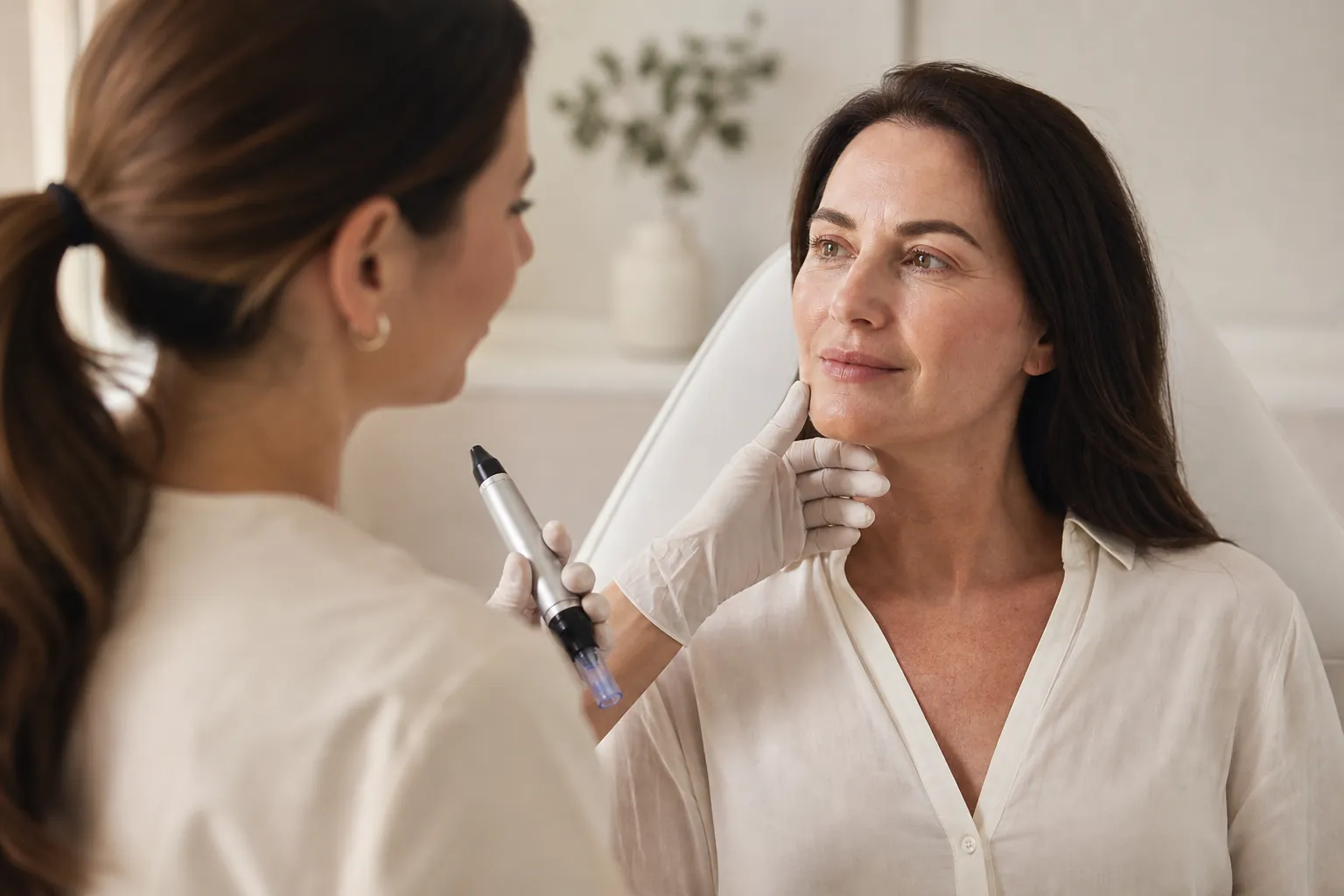
Acne scars are not one thing, and that is the single most useful fact to know before starting treatment. Different scar types respond very differently, and a plan that ignores the distinction produces disappointment.
Which scars respond, and which do not
Rolling scars — broad and shallow with sloping edges — respond best. Shallow boxcar scars respond reasonably. Deep boxcar scars respond less.
Ice-pick scars — narrow and deep — respond least, because the depth is beyond what surface collagen induction meaningfully reaches. They often need a different approach entirely.
Raised and keloid scars are a separate problem and are not treated this way at all.
Most people have a mixture. A useful assessment tells you which of yours are likely to change, which are not, and roughly what proportion of your overall appearance that represents.
Treat the acne first
If acne is still active and new inflammatory lesions are still forming, scar treatment is working against an ongoing process — new scars keep arriving while the old ones are treated, and inflamed skin is a poor candidate for a treatment based on controlled injury.
Getting the acne genuinely under control first, which may mean a dermatology referral rather than a cosmetic treatment, is the step that makes everything afterwards worthwhile. Sometimes the right answer at a first consultation is "not yet".
What the evidence supports
Microneedling is among the better-studied approaches for atrophic acne scarring. Systematic reviews of randomised trials report meaningful improvement in scar severity, used alone or alongside complementary treatments, and it is generally well tolerated.
"Improvement" is the word the evidence supports. Shallower scars, softer edges, more even texture — not a surface returned to how it looked before the acne. People who expect improvement are usually pleased with improvement; people who expect erasure are disappointed by exactly the same result.
Skin tone, and why it matters here
In this region a large proportion of patients have medium to darker skin, where the main concern with resurfacing is post-inflammatory hyperpigmentation.
Microneedling has a comparatively favourable profile because it does not remove the epidermis the way ablative resurfacing does. Comparatively favourable is not risk-free: appropriate settings, avoiding recently sun-exposed skin, and disciplined sun protection afterwards are what keep it that way.
Frequently Asked Questions
Rolling scars, which are broad and shallow with sloping edges. Shallow boxcar scars respond reasonably. Narrow, deep ice-pick scars respond least and often need a different approach.
No. A good outcome means shallower scars, softer edges and more even texture. The treatment works by prompting your own skin to remodel collagen, so it cannot restore the surface to how it looked before the acne.
It is a course rather than a single session, spaced several weeks apart. The number depends on your scar type and severity and is set at consultation.
Not straight after the last session. Collagen remodelling continues for months, so the outcome at three to six months after finishing a course is usually better than at the week it ended.
Generally no. Treating scars while new lesions are forming works against an ongoing process. Getting the acne under control first is what makes the scar treatment worth doing.
It has a comparatively favourable profile because it does not remove the epidermis. Pigmentary change remains possible, so settings, timing and strict sun protection matter.
References
- Sitohang, I. B. S., Sirait, S. A. P., & Suryanegara, J. (2021). Microneedling in the treatment of atrophic scars: A systematic review of randomised controlled trials. International Wound Journal, 18(5), 577–585. https://doi.org/10.1111/iwj.13559
- Atiyeh, B. S., Abou Ghanem, O., & Chahine, F. (2021). Microneedling: Percutaneous collagen induction (PCI) therapy for management of scars and photoaged skin — Scientific evidence and review of the literature. Aesthetic Plastic Surgery, 45(1), 296–308. https://doi.org/10.1007/s00266-020-01927-4
Start with a consultation.
We will discuss what you would like to achieve, explain how the treatment works and help you understand what you can realistically expect.
Related treatments
- LipoZero 5DA non-invasive body-contouring treatment for localised fat. Consultation-led, measured, and grounded in realistic expectations.
- Microneedling with DermapenProfessional microneedling for acne scars, skin texture and skin quality — assessed and delivered by a practitioner.
- Skin RejuvenationAn assessment-led approach to dullness, uneven tone and texture — working with your skin's own renewal rather than resurfacing it aggressively.
Further reading
- LipoZero 5D: What Body Contouring Can Realistically AchieveNon-invasive body contouring explained: how it works, what the published research shows, who it may suit, and why expectations matter.
- Microneedling for Acne Scars: What It Can and Cannot DoMicroneedling improves some acne scars well and others barely. Which scar types respond, how many sessions it takes, and darker skin advice.